
Between November and December 2025, Island Solutions completed ~180 hours of weed control across six Okura management units. The cheniers received full surveys, with all primary weeds—climbing asparagus, smilax, honeysuckle, periwinkle—controlled. Other units were strategically sampled, revealing new weed incursions linked to nearby gardens, forestry disturbance, and private land. Key issues include steep‑slope access, reinvasion pressure, and misidentification risks (stinking iris vs. native tuhara). Priority actions include earlier boneseed/smilax control, addressing major infestations such as the “Pine Apocalypse,” and engaging adjacent landowners to reduce seed sources.
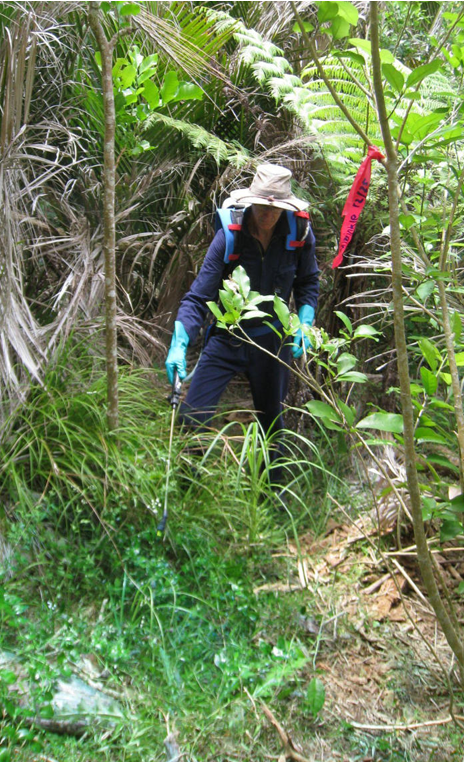
Periwinkle Control in Okura Bush
Download full report: Weeding Report January 2026 Island Solutions
Summary
The November–December 2025 weed control programme at Okura represents one of the most comprehensive sweeps of the area in recent years. Led by Peter Russell (30+ years’ experience) and assisted by Louis Le Compte, the team completed approximately 180 hours of fieldwork across six distinct management units. Their approach combined targeted control of known infestations with opportunistic detection of new weed incursions, guided by the updated Webster (2025) management plan and prior advice from Geoff Reid.
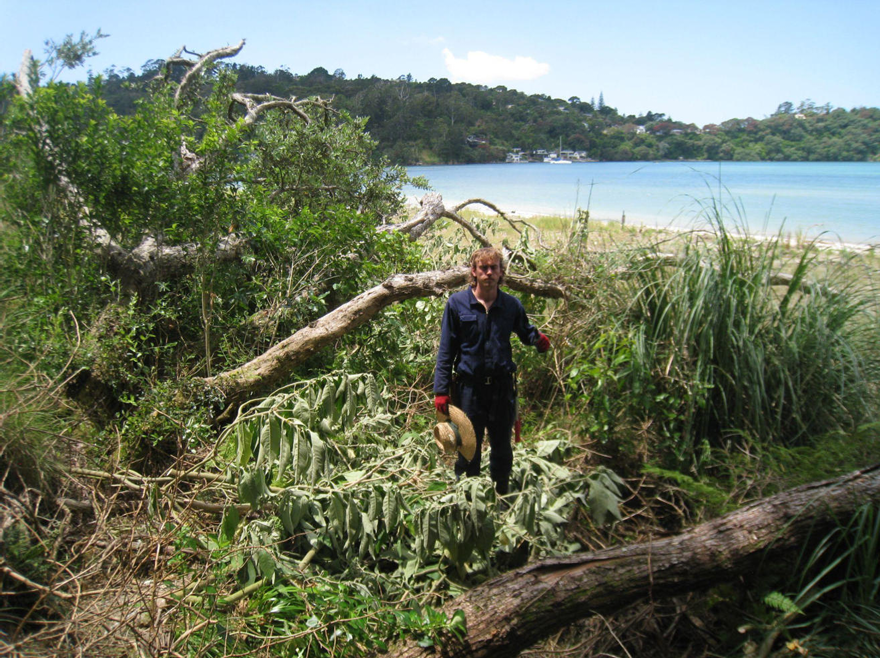
The cheniers (MU1A and MU1B) were the most thoroughly surveyed areas. All primary target weeds—climbing asparagus, smilax, Japanese honeysuckle, and periwinkle—were located and controlled. Numerous secondary weeds were also treated, including boneseed, Chinese privet, cotoneaster, moth plant, loquat, tree lupin, woolly nightshade, and Taiwan cherry. The discovery of several species not previously recorded in these units highlights ongoing reinvasion pressure from nearby gardens and suburban areas. A notable issue emerged around the identification of stinking iris: several plants lacked the characteristic odour and were later suspected to be the native sedge tuhara. The report recommends developing clear identification protocols to avoid accidental removal of native species.
Other management units were surveyed strategically rather than exhaustively. MU1D and MU2 revealed significant challenges on steep slopes, where access limitations prevented full coverage. The team suggests future rope‑access or drone‑assisted work to reach these areas safely. MU3 (Karepiro Bush) and MU5 (Karepiro Beach) showed scattered but important infestations of moth plant, periwinkle, smilax, and blackberry, with some sites requiring follow‑up due to wind constraints or proximity to private land. MU6 (Southern Esplanade) emerged as a high‑risk zone, with early‑stage invasions of Chinese privet, Taiwan cherry, tree privet, woolly nightshade, kahili ginger, and moth plant. The “Kanuka Forest” and its 100‑metre buffer were thoroughly treated, but the surrounding pine plantation—particularly the collapsed area dubbed the “Pine Apocalypse”—is rapidly becoming a major seed source for multiple invasive species.
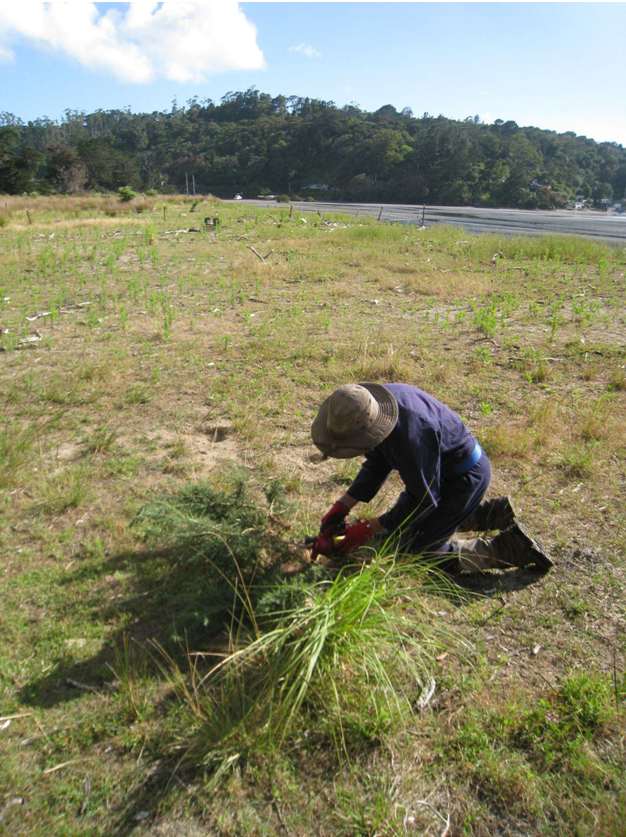
Across all units, the report emphasises the importance of timing. Boneseed and smilax control should occur earlier in the season to prevent fruiting and seed set. The team also highlights the need for clearer reporting standards, including consistent recording of abundance, distribution, herbicide use, and control methods. Standardised daily record sheets would improve data quality and future planning.
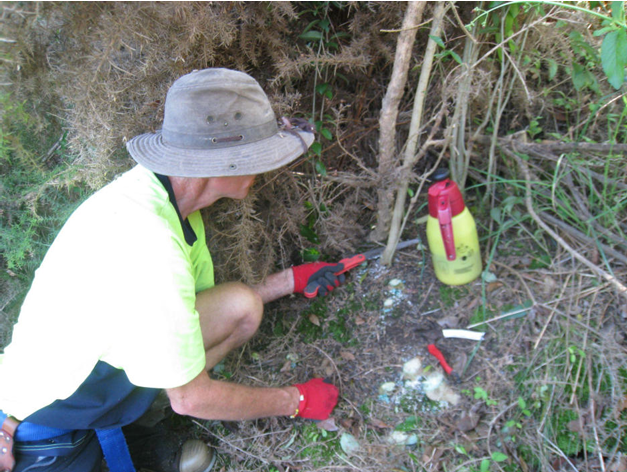
A major theme of the report is reinvasion. Disturbed former forestry blocks, new residential developments, and unmanaged private land are contributing to a steady influx of weeds. The authors argue for a broader strategy that includes landowner engagement, public communication, and leveraging Forest Stewardship Council (FSC) certification requirements to encourage weed control in adjacent plantation areas.
Finally, the report advocates for enhancing native plant diversity within the management units. Increasing species richness strengthens ecological resilience, reduces opportunities for weed establishment, and supports long‑term restoration goals. Combined with improved access, strategic prioritisation, and proactive reinvasion management, these measures form a pathway toward more effective, sustainable weed control in Okura.