
Weed control across the Okura management units in March–April 2026 totalled 121.5 hours, continuing the 2025 programme with full surveys and targeted treatment of priority species. All primary weeds were controlled in the Chenier units, with additional work on pampas, smilax, moth plant, tree lupin, woolly nightshade, and privet. Sandspit and Southern Esplanade received focused interventions, including pampas avoidance near the lagoon and significant ladder fern control. Follow‑up visits in April addressed smilax, pampas, woolly nightshade, and privet. Recommendations emphasise early‑season moth plant control, systematic lupin removal, and improved track maintenance for monitoring access.
Download full report: Weeding Report April 2026 Island Solutions
Summary
The March–April 2026 weed control programme at the Okura sites represents a comprehensive continuation of the previous year’s management strategy, with all five management units receiving detailed surveys and targeted interventions. Across 121.5 hours of fieldwork, the team applied a mix of herbicide techniques—knapsack foliar spray, cut‑stump treatment, and drill‑and‑fill—to address both primary target species and a wide range of secondary weeds encountered during the surveys. The approach remained consistent with ecological sensitivities, adjusting methods according to plant size, species type, and proximity to waterways or bird habitat.
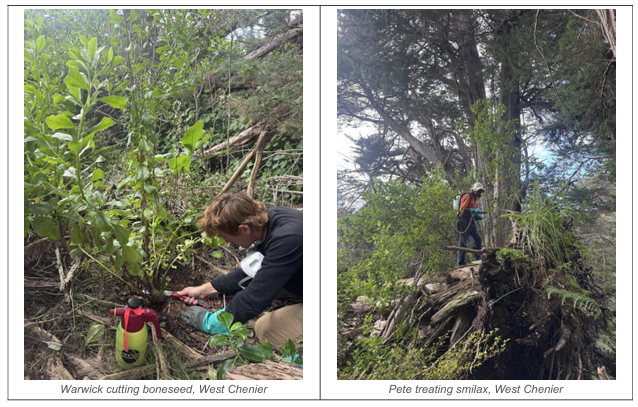
In MU1A West Chenier, the team achieved full coverage of the unit, controlling all primary targets including climbing asparagus, periwinkle, and smilax. Secondary weeds such as boneseed, Chinese privet, moth plant, and woolly nightshade were also treated, with particular emphasis on species known to spread rapidly or produce significant seed loads. The results reflect steady progress from 2025, with several species showing reduced abundance or limited regrowth.
MU1B East Chenier received similarly thorough attention. All primary targets were controlled, and most secondary weeds were located and treated. Notable finds included isolated strawberry guava, sweet pea shrub, and rubber plant—species not typically abundant in the area but important to remove before establishment. Seedling‑level infestations of cotoneaster, pine, macrocarpa, and loquat were systematically pulled or sprayed, maintaining the long‑term objective of preventing woody weed maturation across the chenier systems.
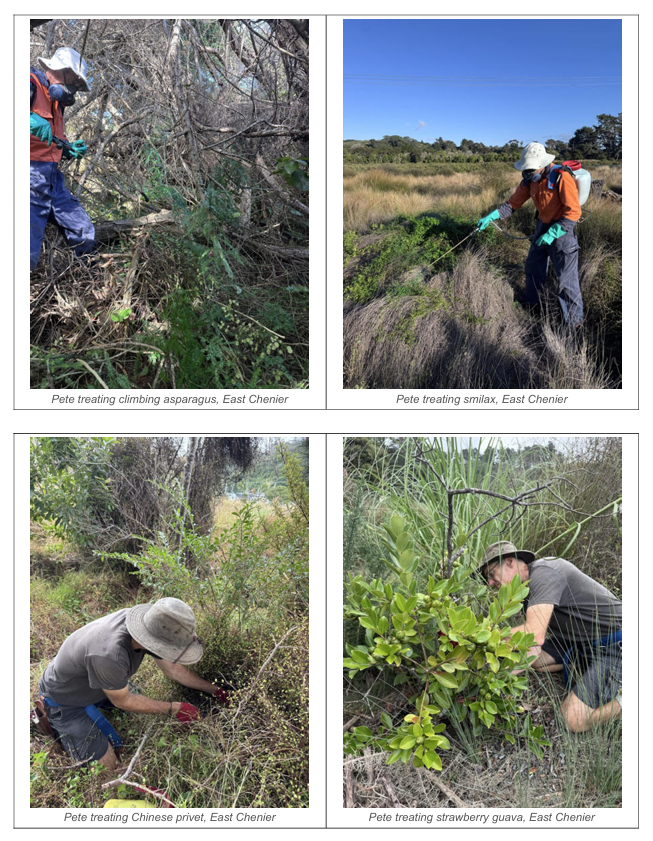
At MU1C Sandspit, the team focused on the landward zone outside the bird breeding area. Pampas was controlled throughout except at the northern tip, where herbicide was withheld to avoid drift into the lagoon. Pine seedlings were removed, and gorse was assessed but found to require no immediate action. Smilax remains a priority for future visits, with its scattered presence suggesting the need for early‑season intervention to prevent expansion.
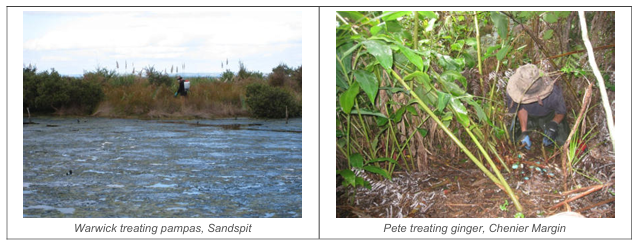
MU1D Chenier Margin received targeted smilax control using remaining herbicide from adjacent operations, ensuring efficient use of resources while addressing a persistent species along the margin.
In MU6 Southern Esplanade, the team walked the estuary margin and inspected the Kanuka Forest, finding only scattered seedlings. Significant work was carried out on Japanese honeysuckle and tuber ladder fern, including a large infestation between the public track and Okura Stream. The unusual distribution of ladder fern warrants continued monitoring, particularly along the stream margin where it appears most established.
Follow‑up visits on 17 and 20 April strengthened the overall programme. Smilax, pampas, woolly nightshade, and privet were treated across multiple units, reinforcing earlier work and reducing the likelihood of late‑season seed production. Herbicide use remained compliant with regional requirements, with detailed records kept for all applications.
The report’s recommendations highlight several species requiring elevated priority: moth plant, tree lupin, woolly nightshade, pampas at Sandspit, and smilax. Additionally, the rapidly overgrowing Kanuka Forest track is identified as a key access issue, with twice‑yearly maintenance suggested to support vegetation monitoring and potential trap‑network expansion.